Choosing a bed rail for a home mattress involves more than comparing prices and star ratings. The right rail should support safer movement without creating new hazards beside the bed. Mattress thickness, frame design, user weight, and installation space all matter. A rail that works well on a firm platform may wobble on a soft, adjustable mattress.
How to select a bedside rail that fits home mattresses? Start by measuring the mattress height, width, and gap beneath it. Check whether the rail uses straps, legs, brackets, or a freestanding base. A caregiver should also inspect the locking mechanism, padding, grip surface, and clearance around the rail. Small details matter. A loose strap can shift overnight.
This guide reviews seven popular bed rails for home use, focusing on stability, ease of installation, portability, and everyday comfort. It also considers how each model performs beside memory foam, hybrid, and traditional spring mattresses. These recommendations are based on practical features, manufacturer information, and common home-care needs. Still, no rail suits every sleeper. That is worth remembering.
Some users need help standing. Others need a handhold while turning. A rail should not replace professional advice when a person has severe weakness, confusion, or a high fall risk. Follow the product instructions carefully, and inspect the rail regularly for movement, damaged straps, or trapped spaces. A careful choice can make nighttime transfers feel steadier, but convenience should never outweigh safety.
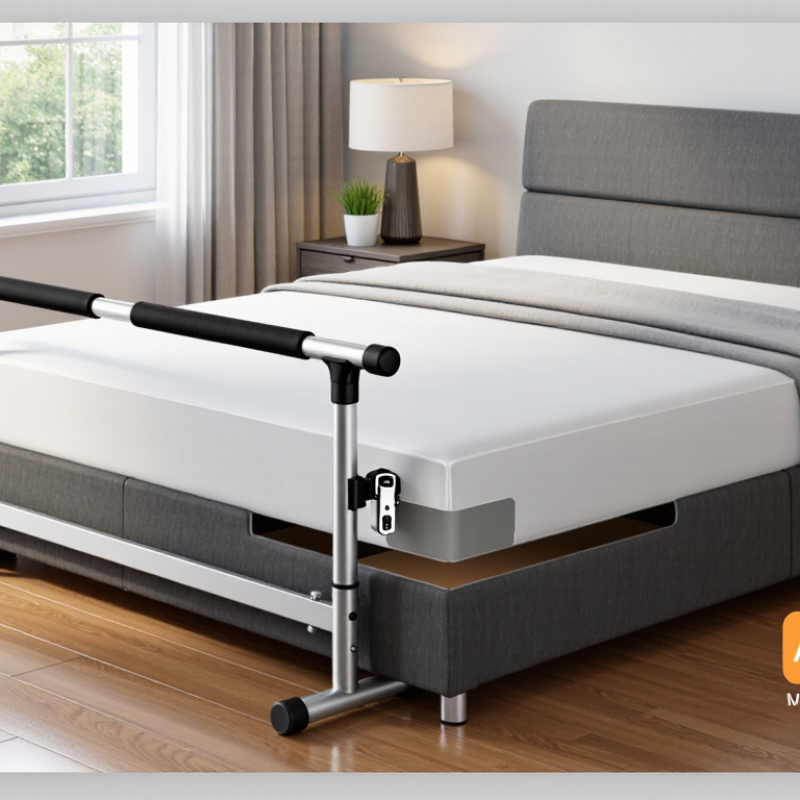
Bed rails are supports fitted beside a mattress to reduce accidental falls and provide a steady handhold. They are not automatically suitable for every sleeper.
A rail may help an older adult sit up, turn over, or transfer from bed to a chair. It can also support someone recovering from weakness, injury, or limited balance at home.
The right user needs more than extra security. A person who climbs over the rail, becomes confused at night, or slides between the rail and mattress may face greater danger. Children should not use adult bed rails unless the product is specifically designed for them. Anyone with dementia, seizures, or serious mobility problems should receive advice from a qualified healthcare professional.
Measure the mattress thickness and check the frame before choosing among the seven best bed rails for home mattresses. The rail should fit firmly, leave no dangerous gap, and resist movement when pulled. Look for a clear release handle, durable padding, and installation instructions that match your bed type. Check the rail each week for loose straps or shifting parts. Small details matter.
I once assumed a taller rail was always safer. That was too simple. A lower, well-positioned rail may offer better access and reduce climbing attempts. Test the rail beside the bed in daylight, then watch how the user reaches, turns, and stands. The safest choice often depends on real movement, not product height alone.
Choosing among seven bed rail types starts with the sleeper, mattress, and room layout. A full-length fixed rail offers continuous protection, but it may restrict transfers. A half-length assist rail supports sitting up and standing. It leaves more open space near the foot.
Folding rails suit caregivers who need easier access during dressing or linen changes. Adjustable-height rails can match different mattress depths, although incorrect adjustment may create unsafe gaps. Clamp-on rails attach to a compatible bed frame and usually feel firm. Check the frame carefully. Some frames cannot support them.
Under-mattress portable rails are useful for temporary setups, guest rooms, or travel. Their stability depends on mattress weight, floor level, and correct placement. Foam bedside bumpers are softer and less intrusive, but they offer limited hand support. They may suit sleepers who need a visual boundary rather than help standing.
Measure the mattress thickness and bed height before comparing models. Then consider whether the user rolls, climbs over the rail, or needs help rising. A rail that works well for one person may frustrate another. I once underestimated the importance of caregiver access; a strong rail became awkward during nighttime assistance. Look for smooth edges, secure locking parts, and clear installation instructions. Ask a qualified healthcare professional for guidance when weakness, confusion, or frequent falls are involved. A rail should never replace observation, suitable lighting, and a clear path beside the bed.
Comparison of seven common bed-rail types using practical factors for home mattresses. Scores range from 1 to 5, where 5 indicates stronger suitability for the stated use.
Full-length and folding rails generally provide the broadest side coverage, while bedside handles and transfer poles are better suited to standing and repositioning. Compatibility depends on mattress height, bed-frame construction, user mobility, and safe installation. Bed rails should not be used as a substitute for professional fall-risk assessment.
Choosing the best bed rail starts with safety, not appearance. The rail should match the mattress height, bed frame, and user’s mobility needs. Measure carefully. A rail that fits one bed may leave a dangerous gap on another. Look for secure locking points, wide support legs, and clear installation instructions. The rail should not shift when someone grips it or turns during sleep.
Comfort matters just as much. Soft padding protects bare arms from hard metal edges. A slim design can provide support without making the mattress feel crowded. Fold-down rails may help caregivers change sheets, but the release mechanism must be firm and easy to control. Avoid complicated buttons, especially in dim bedrooms. Small details matter.
I have learned that “strong” does not always mean “safe.” A rail can feel solid but still sit too low for a thick mattress. Check its height above the mattress and inspect the space beneath it. The user’s weight, strength, and nighttime habits also affect suitability. Someone who climbs over a rail may fall more easily. For older adults or people with limited movement, professional guidance can prevent a poor choice. Test the rail gently after installation, then check it again after several nights. Beds move. Screws loosen. My own first fitting was not perfect, and that mistake made regular checks seem less optional.
Choosing bed rails starts with the mattress size, not the rail’s appearance.
Measure the mattress length, width, and thickness with the bedding removed. A twin mattress needs different coverage from a queen or king. Oversized rails may leave awkward gaps, while short rails may not protect the sleeping edge.
Check the bed frame carefully. A rail for a platform bed may not fit a slatted frame. Measure the distance between slats and inspect the support points.
For a split king, confirm whether the rail fits one mattress section or spans both sections. Adjustable rails can help, but their locking mechanism must remain firm after installation.
Foam mattresses also need attention because their thicker sides can hide the rail’s usable height.
Height matters.
A rail should rise high enough above the mattress to provide practical support. However, an overly tall rail may feel restrictive, especially for children or older adults.
Look for secure attachment, smooth edges, and clear installation instructions.
I once assumed two mattresses with identical labels had the same thickness; they did not. That mistake changed the fit completely.
Recheck every measurement, then test the rail by applying steady pressure from several angles. If the frame shifts or a gap appears, the size may be wrong, even when the package description seems suitable.
Choosing among the seven best bed rails for home mattresses starts with fit, not appearance. Measure the mattress thickness and check the rail’s length, height, and weight rating. A suitable rail should sit firmly against the mattress base without creating a dangerous gap. I recommend models with secure straps or reinforced supports for older adults and people recovering from injury.
Read the installation instructions carefully. Place the rail where the user can reach it without twisting. Tighten every strap or bolt, then press and pull the rail from several directions. It should not slide, tilt, or lift from the mattress. Check the space between the rail and mattress edges. A hand, pillow, or loose blanket should not become trapped there. Never use a rail as a full-body restraint.
Use the rail for steady support, not for climbing or hanging body weight. Keep the floor beside the bed clear, especially at night. Inspect the fittings weekly for loosened screws, bent tubing, cracked plastic, or worn straps. Clean the surface with mild soap and dry it completely. I once overlooked a slightly loose strap during a routine check; it showed how quickly small problems can develop. Replace damaged parts instead of improvising repairs. Reassess the setup after changing the mattress, bed frame, or user’s mobility. Ask a healthcare professional for guidance when weakness, confusion, or frequent nighttime movement is involved.
| Bed Rail Type | Best For | Typical Rail Length | Typical Adjustable Height | Common Mattress Compatibility | Installation Method | Important Safety Considerations | Maintenance Requirements |
|---|---|---|---|---|---|---|---|
| 1. Folding Bedside Assist Rail | Adults who need support when sitting down or standing up | Approximately 40–55 cm (16–22 in) | Approximately 45–55 cm (18–22 in) above the mattress surface | Most standard home mattresses; verify the required mattress thickness | Usually slides beneath the mattress and may use safety straps attached to the opposite side of the bed frame | Designed mainly for balance and transfer assistance, not for preventing a person from rolling out of bed. Keep the mattress firmly against the rail and check for gaps. | Inspect straps, locking joints, and mounting points monthly. Tighten loose fasteners and clean metal or plastic surfaces with a mild cleaner. |
| 2. Half-Length Safety Rail | People who want a balance between fall protection and easy bed access | Approximately 70–100 cm (28–40 in) | Approximately 45–60 cm (18–24 in) above the mattress surface | Compatible with many foam, hybrid, and spring mattresses when the base allows secure anchoring | Typically secured under the mattress with one or more straps or fixed to a compatible bed frame | Leave a clear entry and exit area. The rail should not move independently from the bed base during normal use. | Check the rail after repositioning the mattress. Examine the frame, strap stitching, and release mechanism for wear. |
| 3. Full-Length Bed Rail | Users seeking extended side coverage along much of the mattress | Approximately 120–180 cm (47–71 in) | Approximately 45–60 cm (18–24 in) above the mattress surface | Often suitable for larger mattresses, but the rail length and base attachment must match the bed | Usually attaches to a bed frame or uses a reinforced under-mattress support system | Measure the mattress and bed frame before installation. A full-length rail must not obstruct normal access, emergency exit, or adjustable-bed movement. | Check every support point, hinge, and locking pin regularly. Clean debris from moving parts and do not use the rail if it bends or becomes unstable. |
| 4. Swing-Down Bed Rail | Users who need a rail that can lower for transfers or caregiver access | Approximately 75–105 cm (30–41 in) | Approximately 45–60 cm (18–24 in) above the mattress when raised | Many standard bed bases; compatibility depends on the hinge clearance and attachment system | Fastens to the bed frame or a rigid support base and uses a hinged lowering mechanism | Confirm that the rail locks fully in both the raised and lowered positions. Keep hands, clothing, and bedding away from hinges while operating it. | Test the locking mechanism before each use. Lubricate moving parts only as directed by the product instructions and replace damaged pins or springs. |
| 5. Telescoping Adjustable Rail | Households that need flexible coverage for different mattress sizes | Approximately 75–140 cm (30–55 in), depending on adjustment | Approximately 45–60 cm (18–24 in) above the mattress surface | Useful for several mattress widths, provided the support base and maximum thickness are within the specified limits | Normally secured beneath the mattress or attached to a compatible frame with straps or mounting brackets | Lock every adjustment point before use. Avoid extending the rail beyond its marked maximum length because stability can be reduced. | Inspect adjustment buttons, telescoping tubes, straps, and brackets. Remove dust from locking holes so the pins can engage completely. |
| 6. Dual-Side Bed Rail System | People who need assistance or coverage on both sides of the bed | Approximately 70–105 cm (28–41 in) per side | Approximately 45–60 cm (18–24 in) above the mattress surface | Most compatible with rigid bed frames or bases that can accept a connecting support bar | Two side rails are connected under the mattress or fixed to the bed base to improve stability | Both sides must be installed evenly and secured before use. Maintain a clear path at the foot and head of the bed. | Check the connecting bar, frame brackets, and both rail locks at the same time. Recheck alignment after changing sheets or rotating the mattress. |
| 7. Floor-Supported Bed Rail | Heavy mattresses, adjustable bases, or beds where under-mattress straps are unsuitable | Approximately 75–120 cm (30–47 in) | Approximately 45–60 cm (18–24 in) above the mattress surface | Often useful when the bed frame cannot accept conventional brackets; confirm floor and clearance requirements | Uses legs that extend to the floor and may include a support platform beneath the mattress | Place all legs on a level, solid surface. Ensure the rail does not interfere with wheels, power cables, adjustable-bed movement, or walking paths. | Inspect feet, braces, height adjustment points, and floor contact areas. Keep the support area free of dust and check for shifting after bed movement. |
A bed rail provides a steady handhold beside the mattress. It may help someone sit, turn, or transfer safely. It is not a restraint.
Older adults and people recovering from weakness, injury, or poor balance may benefit. The user must still move safely around the rail.
People with dementia, seizures, serious mobility problems, or frequent nighttime confusion should ask a healthcare professional. Children need specially designed equipment.
Measure the mattress thickness, rail length, and bed-frame space. Check the weight rating and installation method. Fit matters more than appearance.
Follow the instructions carefully. Tighten every strap or bolt. Push and pull the rail from several directions.A rail should not slide, tilt, or lift.
Look between the rail and mattress edges. A hand, pillow, or loose blanket must not become trapped. Dangerous gaps require immediate correction.
Use it for balance when sitting or standing. Do not climb over it or hang full body weight from it. Keep the floor clear at night.
Check it weekly for loose screws, bent tubing, cracked plastic, and worn straps. Clean it with mild soap, then dry it fully.Small problems grow quickly.
Not necessarily. A lower, well-positioned rail may provide easier access and reduce climbing attempts. I once assumed height meant safety, but movement matters more.
Recheck it after changing the mattress, bed frame, or user’s mobility. Watch the person reach, turn, and stand in daylight. Real movement can reveal problems.
Bed rails are supportive devices designed to help people reposition, get in and out of bed, and reduce the risk of accidental falls at home. They can be useful for older adults, people recovering from illness or injury, and anyone with limited strength or balance. This guide explains the seven main bed rail types, including fixed, folding, adjustable, half-length, and portable designs, while comparing their stability, accessibility, portability, and ease of use. It also discusses how padding, height, locking systems, weight capacity, and rail spacing can affect safety and comfort.
How to select a bedside rail that fits home mattresses? Start by checking the mattress size, thickness, firmness, bed frame structure, and available clearance beneath the mattress. Proper installation is essential, and users should follow the instructions, test the rail for movement, and inspect straps, joints, and locking parts regularly. Safe use also requires keeping bedding clear, avoiding excessive pressure on the rail, and replacing damaged components promptly.

Avelar Medical