How to Organize an ECG Machine Cart for Quick Access?

Time:2026-09-15 Author:Ethan
0%

A well-arranged ECG machine cart can turn a rushed bedside assessment into a controlled clinical workflow. When electrodes, cables, paper, wipes, and lead labels have fixed locations, staff spend less time searching. That matters during chest pain evaluations, ward rounds, and emergency admissions. How to organize an ECG machine cart for quick access? The answer begins with patient safety, equipment readiness, and a layout that matches real movement.

This guide draws on practical clinical habits and basic equipment-management principles. Keep the ECG device on a stable upper surface, with cables loosely coiled to prevent sharp bends. Store disposable electrodes in a clean, dry drawer, separated from used supplies. Place printer paper and spare batteries where they can be checked without moving the monitor. Keep disinfectant wipes accessible, but follow the device manufacturer’s compatibility instructions. A small waste-bag holder can reduce clutter. Label each compartment clearly. Do not overload the cart. Heavy items belong on lower shelves to improve stability. Never place liquids beside electrical connections.

A quick pre-use check should confirm power, paper, cable integrity, electrode expiry dates, and recent cleaning. After each use, return every item to its assigned position. It sounds simple. It often fails. Different wards may develop different habits, so the arrangement should be reviewed with nurses, technicians, and infection-control staff. Keep frequently used items within one arm’s reach, while less common supplies stay lower. Observe one busy shift before finalizing the layout. Then adjust it. The best cart is not merely tidy; it supports correct ECG acquisition, protects equipment, and remains usable under pressure. This article explains a practical structure, common mistakes, and a repeatable maintenance routine for reliable access.
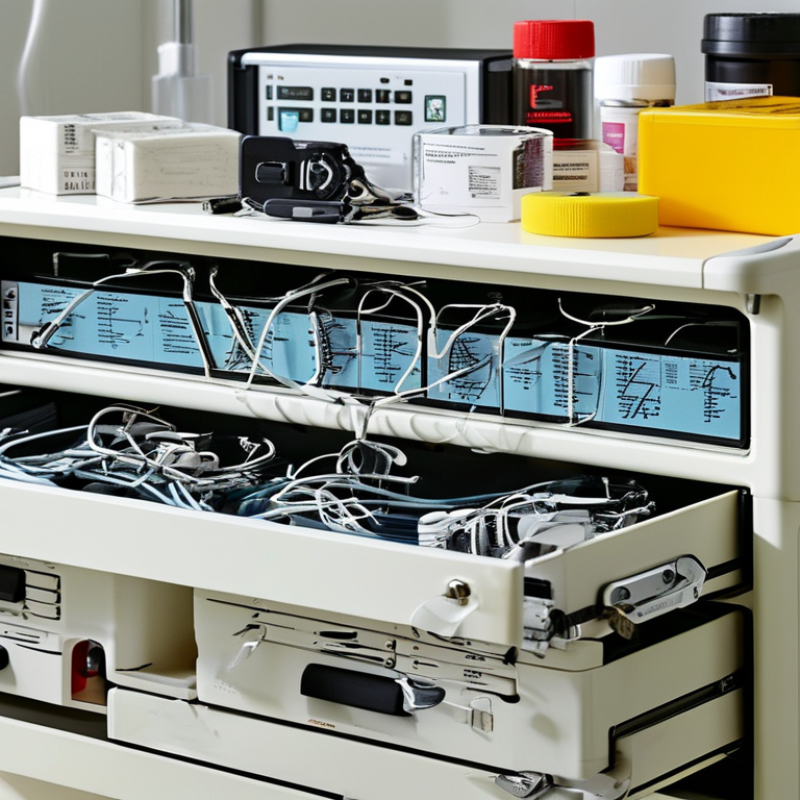
How to Organize an ECG Machine Cart for Quick Access?

Assess the ECG Cart’s Workflow and Equipment Requirements

An ECG cart should be assessed as a workflow, not a storage box. In a busy assessment area, staff may need a resting 12-lead ECG within minutes.

The 2021 AHA/ACC Chest Pain Guideline recommends obtaining one within 10 minutes for suspected acute coronary syndrome.

That target makes equipment location a clinical requirement. Map each step: patient arrival, identification, skin preparation, lead placement, recording, interpretation, cleaning, and charging. Time the process during a real shift.

Our first layout looked tidy, but it delayed electrode retrieval. We had underestimated hand position.

Keep the ECG unit, fresh electrodes, skin-preparation supplies, spare lead wires, printer paper, and disinfectant within natural reach. Separate clean supplies from used accessories. Use visible, labeled compartments. Check battery status, paper level, cable integrity, and device self-test results at every handover.

The World Health Organization reports 17.9 million annual cardiovascular disease deaths, showing the scale of cardiovascular assessment needs (WHO, Cardiovascular Diseases Fact Sheet, 2023).

A cart supporting that workload needs a repeatable check, not memory. Use a simple log with the date, initials, missing items, and fault notes.

Protect printed traces and electronic files from unnecessary exposure. The AHA/ACC guideline also emphasizes rapid ECG acquisition and evaluation.

Some carts still carry too much. Remove rarely used items after reviewing actual usage data. Do not assume the neatest cart is fastest.

Test it with a new user. Their hesitation may expose the real problem.

Select Cart Compartments for Essential ECG Supplies

A well-organized ECG cart begins with compartments, not decoration. Place frequently used supplies at waist height, including electrodes, lead wires, skin-preparation wipes, and gauze. The American Heart Association’s 2020 scientific statement describes a standard 12-lead ECG as using 10 electrodes, including six chest electrodes. That number should shape the drawer layout. Keep electrodes in a sealed, clearly dated compartment, with chest and limb sets separated. A transparent bin prevents cables from becoming a tangled emergency puzzle.

Reserve a second compartment for patient preparation. Store clippers, approved cleansing materials, gloves, and waste bags there. Keep spare paper and batteries in a lower, labeled drawer, away from fluids. The World Health Organization’s Global Patient Safety Report 2024 states that one in ten patients experiences harm in healthcare, while more than half of that harm is preventable. A repeatable cart layout cannot remove every risk, but it reduces hurried searching and missing supplies. Use a simple restocking card after each shift.

Test the arrangement during a real patient transfer, not a quiet inspection. Can a clinician reach electrodes without turning away? Can used items be isolated immediately? I still discover misplaced cables after busy rounds. That is useful evidence, not failure. Review the cart weekly, record delays, and move compartments when workflow proves the original plan wrong. Accessibility matters more than symmetry.

Arrange Devices and Accessories by Frequency of Use

How to Organize an ECG Machine Cart for Quick Access

An ECG cart works best when its layout follows clinical frequency, not personal preference. Place the machine, patient cables, and electrode packs on the top surface or in the first drawer. These items support nearly every examination. Keep them visible, clean, and easy to lift with one hand. A small labeled container can hold spare clips, skin wipes, and disposable razors.

Store moderately used accessories in the second drawer. Include extra leads, paper, batteries, and approved cleaning supplies there. Group each item in a separate compartment, so staff can identify shortages quickly. Keep heavier supplies low to reduce tipping risks. Avoid overfilling drawers. Crowded storage slows care and hides expired or damaged items.

Rarely used materials can stay in the bottom drawer, provided local procedures allow it. Check cables for cracks, confirm battery status, and inspect the cart at every shift change. A simple checklist beside the handle supports consistent practice. Staff should return accessories to the same location after each ECG. That habit matters.

A practical trial may reveal flaws. Our first layout placed spare paper too low, and replacing it became awkward during a busy round. We moved it upward after observing actual use. Review the arrangement with nurses and technicians, because their workflow may differ. Keep patient privacy, infection-control procedures, and facility guidance in view when adjusting the cart.

Label, Secure, and Protect All Cart Components

How to Organize an ECG Machine Cart for Quick Access?

An ECG cart should make every component visible, protected, and easy to verify. Label the monitor, patient cables, electrodes, power cord, paper, and cleaning supplies. Use large, wipe-resistant labels. Place the most frequently used items at waist level. Keep cables coiled loosely, never sharply bent. A damaged lead can delay testing and create unreliable readings.

Security matters too.

Use a designated parking position and a simple end-of-use checklist. Lock drawers when the cart is unattended, especially in shared clinical areas. FDA data recorded more than two million medical device reports in 2023, although not all involved ECG equipment. Clear checks can still reduce preventable equipment failures. The WHO Global Report on Infection Prevention and Control estimates that 7 in 100 patients in high-income hospitals acquire healthcare-associated infections. Therefore, protect clean supplies from exposed cables, used electrodes, and wet surfaces.

Tips:

Photograph the correct cart layout. Add a “missing or damaged” tag. Clean high-touch surfaces after each use, following the facility’s approved procedure. Inspect cables before every shift. Small labels help. A common weakness is over-organizing the cart until staff cannot find essentials quickly. Test the layout with a nurse during a busy handover. If the paper roll is hidden, the system is not truly ready. Review the arrangement monthly, and change it when real workflow exposes a problem.

Create a Restocking and Maintenance Routine

Create a Restocking and Maintenance Routine

A reliable ECG cart depends on a repeatable restocking routine, not memory. Assign one person per shift to check electrodes, paper, skin-preparation wipes, batteries, and spare cables. Use a simple checklist beside the cart. Record shortages immediately. Small gaps become delays.

Keep supplies arranged by use. Place electrodes and wipes in the top drawer, with cables coiled loosely below. Check expiry dates weekly, especially for adhesive electrodes and conductive gel. Rotate older stock forward. The World Health Organization and UNICEF reported that only 78% of healthcare facilities had basic hygiene services globally in 2022. Cleaning supplies must remain available, not assumed. Disinfect high-touch cart surfaces after patient contact, following the equipment and disinfectant instructions. The CDC states that about one in 31 hospital patients has an associated healthcare infection on any given day. A clean cart supports safer workflow, although it cannot replace hand hygiene.

At the end of each shift, inspect the display, lead wires, connectors, wheels, and power cord. Run the device self-test when required by the operating procedure. Charge batteries in a designated location, and label any faulty item clearly. Never return questionable equipment to service. Record inspection dates, faults, corrective actions, and biomedical verification. The routine may feel excessive. It is still useful. I have found that missed paper rolls cause more disruption than major faults, so the checklist should reflect real usage, not theory. Review it monthly with clinical and biomedical staff, then adjust quantities and inspection frequency.

Sources: WHO/UNICEF Joint Monitoring Programme, Progress on WASH in Healthcare Facilities 2000–2022; CDC, Healthcare-Associated Infections Data and Statistics.

FAQS

Why should an ECG cart be assessed as a workflow?

It supports patient identification, skin preparation, recording, cleaning, and charging. A tidy cart can still slow electrode retrieval. Test the entire process during a real shift.

How quickly should a resting 12-lead ECG be available?

For suspected acute chest pain emergencies, clinical guidance recommends obtaining one within 10 minutes. Location matters. Keep essential equipment within natural reach.

Which items belong on the top surface or in the first drawer?

Place the ECG unit, patient cables, electrode packs, skin wipes, and small preparation tools there. Staff should lift common items with one hand. Keep them visible.

How should less frequently used accessories be stored?

Use the second drawer for spare leads, printer paper, batteries, and approved cleaning supplies. Place heavy items lower to reduce tipping risks. Avoid crowded drawers.

What belongs in the bottom drawer?

Store rarely used materials there when local procedures permit. Check their condition regularly. Rarely used does not mean forgotten.

How can staff notice missing or faulty equipment quickly?

Use a simple log showing the date, initials, missing items, and fault notes. At each handover, check battery status, paper level, cable integrity, and self-test results. Memory is unreliable.

How should clean and used accessories be handled?

Separate clean supplies from used accessories with clearly labeled compartments. Follow facility infection-control procedures and approved cleaning instructions. Do not mix them.

How can a team test whether the cart layout really works?

Ask a new user to perform a typical ECG without coaching. Watch for hesitation, awkward reaching, or hidden supplies. Our first layout looked neat but failed this test.

When should the cart arrangement be changed?

Review it after observing actual usage data and staff feedback. Move frequently needed items upward, such as replacement paper. The best layout may still need revision.

Conclusion

How to organize an ECG machine cart for quick access? Start by reviewing the clinical workflow and identifying the equipment needed for routine and urgent ECG procedures. Choose cart compartments according to function, keeping the ECG machine, cables, electrodes, paper, disinfectant wipes, batteries, and other essential supplies in clearly designated spaces. Items used most frequently should be placed in the top drawer or another easily reachable area, while less frequently used accessories can be stored in lower compartments.

To maintain efficiency, label each section and secure delicate devices, cables, and connectors to prevent damage or tangling during transport. Protective covers and organized cable management can also help preserve equipment cleanliness and condition. Finally, establish a simple restocking and maintenance routine, including checks for missing supplies, battery levels, cable integrity, cleanliness, and machine operation. Consistent organization and regular inspections help staff prepare faster, reduce interruptions, and keep the ECG cart ready for its next use.

Ethan

Ethan

Ethan is a seasoned marketing professional with a deep expertise in our company's innovative product line. With a passion for sharing knowledge and insights, he takes the lead in regularly updating our corporate blog, where he explores industry trends, product features, and effective marketing......