Hospital-acquired infections rarely begin with one dramatic mistake. They often follow repeated contact with handles, drawers, wheels, and shared supplies. A treatment cart can carry clean dressings in the morning and unseen contamination by afternoon. This risk makes cart design part of infection prevention, not merely a purchasing decision. The guiding question is: How to prevent hospital-acquired infections through cart design? A credible answer connects engineering, clinical practice, and daily cleaning behavior.
Experienced nurses and environmental-services teams can identify where contamination persists. Smooth, sealed surfaces reduce traps for moisture and bioburden. Rounded corners simplify wiping. Pull-out trays, recessed handles, and removable bins can limit contact. Nonporous materials matter, but material claims require verification from manufacturers and infection-control specialists. Carts should separate clean and used items physically. Color cues and clear labels can reduce hurried errors. Lockable compartments protect sterile supplies from unnecessary handling. Large casters improve movement, yet they also collect soil near patient beds. Their design deserves the same scrutiny as the work surface.
Reliable prevention requires more than an attractive prototype. Staff should test a cart during busy medication rounds, isolation-room entry, and end-of-shift disinfection. Audits can examine high-touch points through direct observation or fluorescent markers. Small failures may appear. A disinfectant might damage a coating, or a bin may stay damp overnight. These findings are useful, not embarrassing. Design matters. Cart design must support approved disinfectants, contact times, and local procedures. No cart eliminates infection risk. However, a cleanable, organized cart can make safer behavior easier and more consistent. Frontline feedback, maintenance knowledge, and infection-prevention expertise should guide revisions.
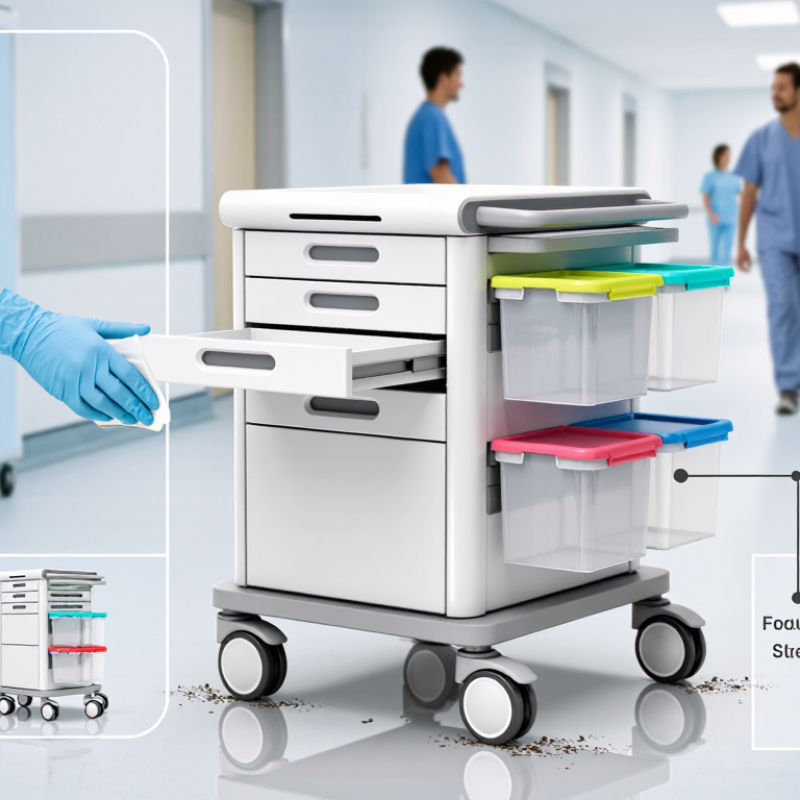
Hospital carts travel through patient rooms, corridors, treatment areas, and storage spaces. Their handles, drawers, shelves, and wheels can collect microorganisms during this movement. Staff may touch a cart after contact with a patient, used equipment, or contaminated packaging. If the same cart enters multiple rooms without cleaning, it can carry contamination between care zones.
In daily practice, the highest risk often comes from overlooked surfaces. A rushed wipe may miss drawer edges, wheel guards, or the underside of a shelf. It may also fail when the surface remains visibly dirty. Carts need a defined clean-to-dirty workflow, with supplies separated from waste and used equipment. Staff should use an approved disinfectant and keep the surface wet for its required contact time. Shortcuts are common. They should not become routine.
Reliable prevention depends on clear responsibility. Cleaning staff and clinical teams need to know who cleans the cart, when cleaning occurs, and which areas require special attention. A simple checklist can record the date, time, and staff initials. Supervisors can inspect high-touch points with direct observation. Training should include realistic details, such as cleaning a cart after a splash, before entering another room, and at the end of a shift. No system is perfect. Reviewing missed areas helps improve the process.
Hospital carts travel between patient rooms, treatment areas, and supply spaces, carrying more than equipment. Handles, drawer pulls, and work surfaces can collect contamination during routine use. A cart parked beside a bed may then move that contamination elsewhere. Small details matter.
Design can make cleaning easier—or quietly undermine it. Smooth, nonporous surfaces and rounded corners leave fewer places for soil to hide. Cracked coatings, exposed seams, and overcrowded drawers complicate wiping. Separate storage for clean supplies and used items helps prevent mix-ups. Clear labels and an easy-to-clean handle are practical, not decorative. A cart with too many compartments may look efficient, yet take longer to inspect.
Use matters as much as design. Staff should clean high-touch areas between appropriate uses, following the facility’s infection-control procedures and the disinfectant’s stated contact time. Keep clean supplies covered, avoid placing them on a surface just used for soiled items, and perform hand hygiene at the right moments. In a busy ward, a cart may be needed before cleaning feels convenient. That pressure is real. It is also a reason to keep carts uncluttered and cleaning steps simple, while checking regularly for damage that makes reliable cleaning harder.
| Cart Design or Use Factor | Potential Infection Risk | Qualitative Risk | Prevention Measures | What to Monitor |
|---|---|---|---|---|
| Frequently touched surfaces, such as handles, drawer pulls, and worktops | Contamination can transfer to hands or equipment when surfaces are touched and hand hygiene is missed. | Higher when cleaning is inconsistent or the cart moves between care areas | Clean and disinfect high-touch surfaces at the frequency specified by facility policy and the disinfectant label. Perform hand hygiene at indicated moments. | Cleaning completion, product contact time, and whether staff can reach all high-touch areas |
| Cracks, seams, damaged coatings, or hard-to-clean joints | Soil and moisture may remain in damaged or inaccessible areas, making effective cleaning more difficult. | Higher if surfaces are visibly damaged or cannot be cleaned reliably | Choose durable, smooth, nonporous surfaces that tolerate approved cleaning products. Repair or remove damaged carts from service according to facility procedures. | Surface condition, residue after cleaning, and maintenance or replacement requests |
| Shared carts used across rooms or units | A cart may carry contamination between locations if it is not cleaned at appropriate transition points. | Context-dependent; greater concern when moving between isolation and non-isolation areas | Define where carts may be used, when they must be cleaned, and whether dedicated equipment is required for specific precautions. Follow local isolation policies. | Cart movement patterns, cleaning between designated uses, and adherence to unit protocols |
| Clean supplies stored beside used or contaminated items | Clean items may become contaminated through contact, splashes, or handling. | Higher when clean and used items are not physically separated | Separate clean supplies from used equipment and waste. Use designated, labeled storage areas and avoid placing used items on clean work surfaces. | Storage layout, correct segregation, and presence of unwrapped supplies on exposed surfaces |
| Open drawers, uncovered supplies, or unnecessary items on the cart | Exposed supplies can collect dust or be touched during care; clutter can obstruct cleaning. | Higher when supplies remain exposed or clutter prevents surface access | Keep only necessary items on the cart, store supplies in clean closed compartments where appropriate, and clean surfaces after removing items as required. | Clutter, expired or unused supplies, and access to all surfaces during cleaning |
| Medication preparation or clean procedures performed on a cart | Contamination of a preparation surface or supplies can create a pathway to patients. | Higher if preparation areas are shared with used equipment or not disinfected | Use a designated clean area for medication preparation, separate it from sinks and contaminated items, and follow medication-safety and infection-control policies. | Separation of clean and dirty tasks, surface disinfection, and staff compliance with preparation procedures |
| Shared keyboards, touchscreens, scanners, or other electronics | Frequently handled devices may be missed during routine cleaning or damaged by unsuitable products. | Context-dependent; depends on frequency of handling and compatibility with disinfectants | Use devices compatible with facility-approved products and follow manufacturer cleaning instructions. Include shared controls in cleaning procedures. | Whether controls are included in cleaning checklists and whether devices remain functional after cleaning |
| Waste bins or linen bags attached to carts | Leaks, overfilled containers, or contact with clean supplies can spread contamination to cart surfaces. | Higher if containers are damaged, overfilled, or poorly positioned | Use designated leak-resistant containers, keep waste separate from clean supplies, replace bags before overfilling, and clean spills promptly using facility procedures. | Container condition, correct segregation, overfilling, and prompt spill response |
| Unclear responsibility for cart cleaning | Tasks may be missed when staff assume another person or department is responsible. | Higher when ownership and cleaning schedules are not defined | Assign responsibility by role, define cleaning triggers and schedules, and provide accessible checklists and approved products. | Documented completion, staff understanding of responsibilities, and follow-up on missed tasks |
| Cart wheels and lower frame | Wheels and lower surfaces can collect dirt and may transfer it between areas or be overlooked during cleaning. | Depends on route, floor conditions, and cleaning protocol | Include accessible lower surfaces in routine cleaning as specified by facility policy. Avoid placing clean supplies where they can contact wheels or the floor. | Visible soil, cleaning coverage, and separation of supplies from the floor and wheel area |
Implementation note: Follow facility infection-prevention policies, product labels, and equipment instructions. Carts are one part of a broader infection-prevention program that also includes hand hygiene, appropriate personal protective equipment, and safe handling of supplies and equipment.
How to Prevent Hospital Acquired Infections with Carts?
Establishing Cleaning and Disinfection Procedures for Carts
Hospital carts move between rooms, so their handles, shelves, and wheels can collect contamination. The CDC reported that about one in 31 U.S. hospital patients had at least one healthcare-associated infection on a given day, based on 2015 data. That figure is not cart-specific, but it highlights why shared equipment deserves attention. A written procedure should name who cleans each cart, when cleaning happens, and which disinfectant is approved for the surface and target organism. Follow the product label’s contact time; a quick wipe may not be enough. Clean visible soil first, then disinfect, keeping surfaces wet for the required time.
Tips: Clean carts between patients and at scheduled intervals. Pay close attention to push handles, drawer pulls, and wheel locks. Use fresh wipes, and never return a used cloth to the supply. Mark cleaned carts clearly, and keep clean supplies separate from used items. Document completion with a checklist or log. It is easy to miss the underside of a shelf. Check it anyway.
Train staff with demonstrations and periodic observation, not just a policy sheet. Include a process for cleaning carts after spills and before repair or storage. Review missed logs and inspection findings with staff; repeated gaps may mean the schedule is unrealistic. CDC’s Guideline for Disinfection and Sterilization in Healthcare Facilities emphasizes using disinfectants according to their labels and keeping equipment clean. Local infection-prevention teams should adapt procedures to the cart materials and care setting. Don’t assume one routine fits every unit.
Hospital carts can carry clean supplies, used equipment, and invisible contamination between patient areas. Their movement deserves the same attention as other high-touch surfaces. Staff should handle carts with clean hands and keep them away from floors, walls, and patient beds. Use a defined route whenever possible. Avoid unnecessary stops. Before entering a room, check the cart’s exterior for spills, dust, or loose packaging. After leaving, disinfect handles, drawers, and frequently touched edges with a facility-approved product and required contact time. A quick wipe is not always effective. The surface must remain visibly wet for the stated time.
Storage practices matter just as much. Keep clean carts in a dry, covered area with enough space for staff to pass without brushing against them. Do not park them beside waste containers, sinks, or soiled-linen routes. Separate clean and used carts clearly, and label their status. Staff hygiene supports every control. Perform hand hygiene before loading supplies, after removing gloves, and after touching contaminated equipment. Gloves do not replace hand cleaning. Training should include observed cart cleaning, not only online instructions. Supervisors can use simple checklists and review missed steps without blame. Still, checklists have limits. A busy unit may skip a step during an urgent transfer. That weakness should trigger workflow redesign, extra carts, or adjusted staffing, rather than quiet acceptance. Infection prevention teams should audit results and revise procedures when evidence changes.
Hospital carts move between patient rooms, supply areas, and clinical workspaces, so their handles, shelves, and wheels can collect contamination. Regular safety audits help teams spot problems before they become routine. Inspect high-touch surfaces, damaged finishes, loose handles, and wheels that drag dirt across floors. Check whether clean supplies remain separate from used items.
Use a short checklist and record what was found, when it was addressed, and who followed up. Small details matter. A cracked shelf can be difficult to clean, while an unclear label may lead staff to mix clean and used materials. Audits should follow the facility’s infection prevention procedures, not replace them. They can also miss issues when rushed, so teams should review whether the checklist reflects real cart use.
Training works best when staff practice cleaning and organizing an actual cart, rather than only reading instructions. Show which surfaces need attention and how to keep supplies arranged consistently. Then invite questions; people may hesitate to mention confusing steps. Maintenance matters too. Repair or remove carts with broken parts, peeling surfaces, or unreliable wheels, and document completed work. A cart may look serviceable at a glance, but that is not always enough. Regular review helps teams catch the gap.
Carts move between rooms and work areas. Handles, drawers, shelves, and wheels may collect microorganisms.
Staff may miss drawer edges, wheel guards, and shelf undersides. Easy to overlook.
Clean it after a splash, before it enters another room, and at shift’s end. Follow facility procedures.
Use an approved disinfectant and keep surfaces wet for its required contact time. A quick wipe may not be enough.
Set a clear clean-to-dirty workflow. Keep supplies apart from waste and used equipment.
Inspect handles, shelves, wheels, damaged finishes, and supply separation. Record findings and follow-up actions.
Practice on an actual cart. Show which surfaces need attention, then invite questions about confusing steps.
Address broken parts, peeling surfaces, or unreliable wheels. Document completed maintenance; a cart can look fine but still need repair.
Hospital carts can become vehicles for hospital-acquired infections when frequently touched surfaces, poor storage practices, and shared equipment allow microorganisms to spread between patients, staff, and clinical areas. Effective prevention begins with asking, “How to prevent hospital-acquired infections through cart design?” Carts should use smooth, nonporous, easy-to-clean surfaces, minimize difficult-to-reach gaps, and provide organized storage that separates clean supplies from used or contaminated items.
Healthcare facilities should establish clear cleaning and disinfection procedures based on how often carts are used and the level of contamination risk. Staff should clean high-touch areas regularly, disinfect carts after exposure to contaminants, and allow surfaces to dry properly. Safe handling, designated storage locations, hand hygiene, and appropriate protective practices further reduce transmission. Routine audits can verify compliance, while staff training reinforces correct procedures. Scheduled maintenance is also essential because damaged wheels, drawers, or surfaces may create hidden contamination points and make thorough cleaning more difficult.

Avelar Medical